
MateriaX / Essays and talks
Essays, presentations, and research.
A closer look at how I think and work, through long-form essays, industrial presentations, practical frameworks, and peer-reviewed research.
Essays / Series 01
Why materials take decades to be adopted
A promising material can take decades to reach widespread use. Its development continues in processes and products controlled by other companies. This series examines where those dependencies slow adoption, how they shape integration decisions, and what better coordination can change.

Why materials take decades to be adopted
The science is usually finished long before the market moves.
Read the essay →
Why joint development usually fails, and how to run one that does not.
Unless you integrate all the way to the final user, there is always at least one boundary you do not own, and for a pure material there are usually several.
Read the essay →Presentations and frameworks
From partnership structure to industrial scale.
Two public presentations from different parts of the work: building a productive corporate partnership and industrializing performance materials.
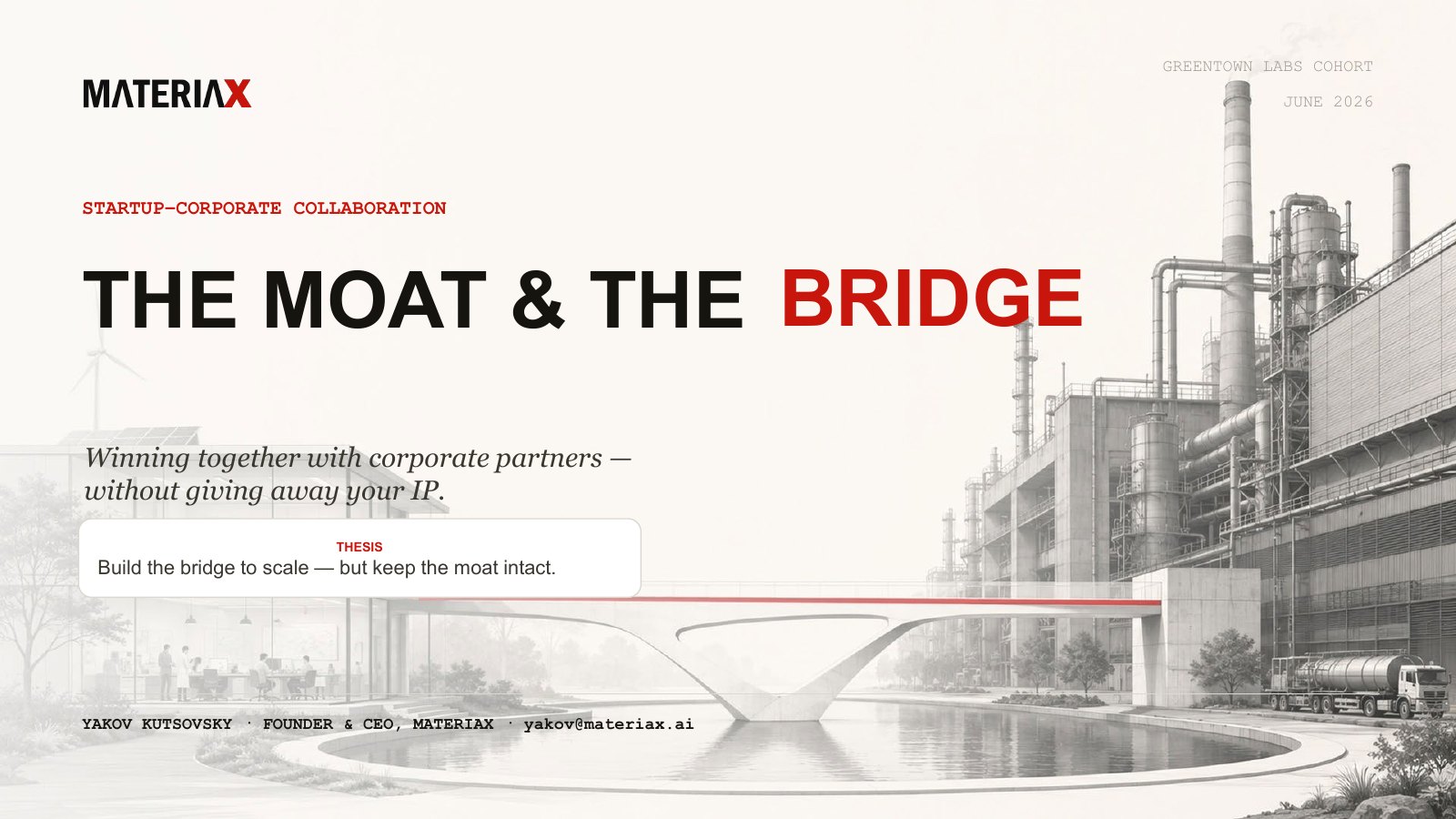
The Moat and the Bridge
How startups work with corporate partners without giving away their future.
View the 31-slide presentation →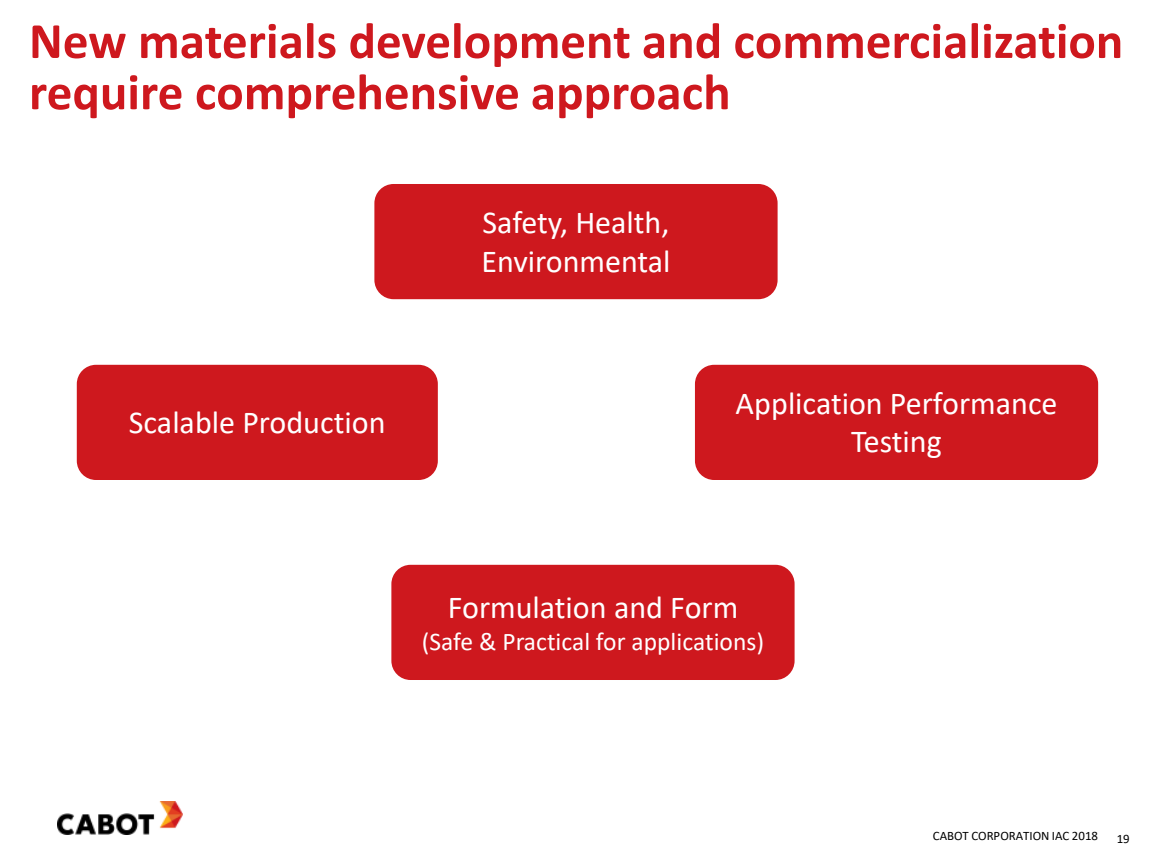
Cabot Technology Overview
Industrializing performance materials across application requirements, process, scale-up, formulation, safety, and cost.
View the 24-slide presentation →Research and public record
Published evidence.
Peer-reviewed research, patents, and public reporting provide a record that can be checked independently.
Publications and patents
The record spans thirty-seven years, from surface physics to fatigue-resistant composites and materials commercialization.
Recent Harvard research
Research with Zhigang Suo's group on tougher, longer-lasting elastomers and composites.
Harvard SEAS · PNAS research on silica-reinforced natural rubber · Open paper ↗
Harvard SEAS · Nature research on fatigue-resistant reinforced rubber · Open paper ↗
Harvard SEAS · The PNAS tire-composite work (2026)
Harvard SEAS · The Nature fatigue-resistance work (2023)